Tag Archives: medicine

What kills twice as many Americans in one year as did the Vietnam & Iraq wars combined?


The Vietnam War waged from 1961 – 1975 and American battle deaths reached 47,410.
The Iraq War waged from 2003 – 2011 and American battle deaths reached 4,487.
In one year the CDC estimated “that 1.7 million hospital patients become infected each year, causing or contributing to the deaths of nearly 100,000 people.”

This, believe it or not, indicated some improvement since 2000-2002 when “an average of 195,000 people in the USA died due to potentially preventable, in-hospital medical errors in each of the years 2000, 2001 and 2002, according to a new study of 37 million patient records that was released today by HealthGrades, the healthcare quality company.”

To try to stop this carnage in American hospitals, the Institute for Healthcare Improvement (IHI) began a campaign  to save 100,000 Lives.  IHI engaged over 3000 US hospitals (representing over 80% of total US hospital discharges) from January 2005 to June 2006 in its campaign to avoid 100,000 unnecessary deaths by adopting six evidence based interventions:
  • Deploy rapid response teams to patients at risk of cardiac or respiratory arrest
  • Deliver reliable, evidence based care for acute myocardial infarction
  • Prevent adverse drug events through drug reconciliation (reliable documentation of changes in drug orders)
  • Prevent central line infections
  • Prevent surgical site infections
  • Prevent ventilator associated pneumonia.

“The campaign estimates that, as of April 2006, participating hospitals had saved over 84 000 lives (based on 83% of participating hospitals submitting mortality data).”
The results so encouraged IHI that it went on to start the 5 Million Lives Campaign. IHI reported Hospitals participating in the Campaign had not only significantly reduced their monthly hospital acquired infection (HAI) rates, in some months all the way down to zero, but “a surprising number were getting down to zero and staying there.”
“If we could focus our efforts on just four key areas –
  1. failure to rescue,
  2. bed sores,
  3. postoperative sepsis, and
  4. postoperative pulmonary embolism – and
  5. reduce these incidents by just 20 percent, we could save 39,000 people from dying every year,” said Dr. Collier, VP of HealthGrades.
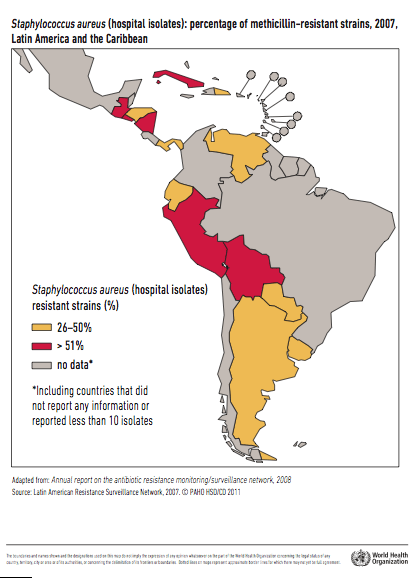
    Thus armed with American facts I tried to obtain similar studies about the hospitals in the Caribbean but could find none. However, as the WHO map below shows, Latin America is a hotbed of untreatable Staph. aureus infections so avoid hospitals wherever you go.
An Ounce of Prevention

Harvard did a study in Guatemala of 3 villages:

  1. one received modern medicine,

  2. the second got medical care plus access to better nutrition and

  3. the third got neither.


After 5 years there was hardly any difference in outcomes”.

Similar studies on Navajo Indians living in poverty and the 1970 Welfare Study in New York showed no difference in morbidity or mortality among aged subjects.”

The conclusion: “From these and other evidences what we doctors do for people is rather insignificant.”

So what’s significant?    In the last 30 years Heart-related deaths have dropped 40 – 50% – the presumed causes:

  1. increased exercise,

  2. less smoking and

  3. dietary modifications.

What remains therefore is to incentivize fitness through lower health insurance premiums. The more fit you are the less you pay.

“We haven’t found any biologic reason not to live to 100,” Director of the National Institute of Aging.

But are we getting ready for the future?

As many as 552 million people, or about 1 in 10 adults worldwide, could have diabetes by 2030, according to a recent report by the International Diabetes Federation. Additionally, as many as 183 million people may be unaware that they have diabetes, according to the report, and the highest proportion of cases is among those ages 40 to 59.

What can we do for all these Patients?

1. Incentivizing them by offering to reduce health insurance premiums if they adopt healthy behaviors.

For example, the average American spends $8,200 per year on health expenses. A paper in JAMA showed that by using a health questionnaire to survey 5,689 adults over the age of 40 with one chronic condition and triaging them to an appropriate risk group —  diet, smoking, alcohol, exercise and so forth — this simple strategy lowered health care costs per individual by an average of $2,000 a year.

2. Get rid of the needle for testing Diabetics’ blood sugar:

Instead use a C8 MediSensor: “It shines a light into your body and measures the glucose signature return, and displays the measurement on your cell phone,” said Doug Raymond, the company’s vice president. It can improve the lives of diabetics by giving them a continuous view of their glucose levels without the pain, inconvenience and high cost of invasive glucose monitoring.

Paul Zygielbum, COO of C8 MediSensors, is waiting for regulatory approval for the company’s noninvasive glucose monitor that uses light technology to measure sugar levels.

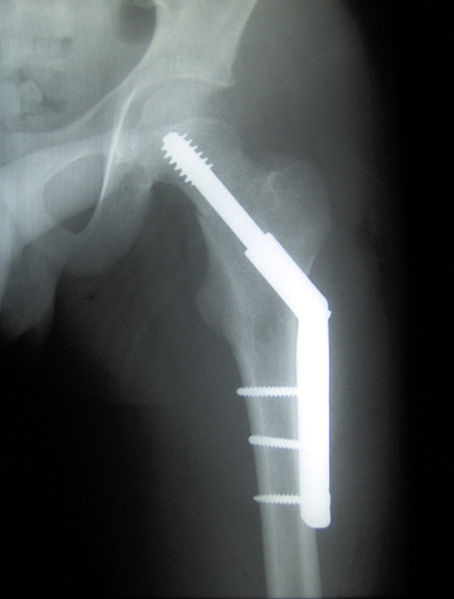
3. Prevent hip fractures:

Kaiser used its electronic record-keeping system on 620,000 people in Southern California and reduced hip fracture rates by 37% to 50% by means of a systematic focus on prevention. Since a hip fracture costs $80,000 on the open market the cost savings are huge.

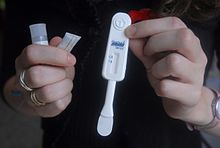
4. Give them a saliva test for HIV:

A popular oral screening method for HIV is just as effective as traditionally used blood tests.
The ‘OraQuick HIV 1/2’ swab-style test demonstrated 99 percent accuracy when used in populations with a high HIV risk and 97 percent accuracy in low risk populations. An accuracy rating of 99 percent is similar to that achieved by HIV blood tests.

5. What about Cancer? How do we advise them?

Lung and Bladder cancer:

Stop Smoking


Colon Cancer:

Offer pleasant prep-free colonoscopies. 

Use Check-Cap’s ingestible and disposable imaging capsule to image the colon in 3D. The capsule will require no bowel cleansing before ingestion and no hospital visit, allowing patients to go about their daily routines without having to alter their activities.

GE is investing in the Check-Cap imaging capsule that can help detect colorectal cancer as it travels through the intestines.

“Deaths from colorectal cancer could be cut by as much as 60% if all people aged 50 years or older received regular screening tests.”

Prostate Cancer:

No known way of prevention yet.

• Learn about prostate cancer

• Talk with your doctor

• Make the decision that’s right for you

Conclusion:

Obviously we can save millions of lives and billions of dollars by preventing disease. The question, therefore, is will we switch from waiting until disease sets in and then trying to cure it or will we pro-actively try to prevent it? As the bard once said, “the fault, dear Brutus, lies not in our stars but in ourselves that we are underlings.”

Are you ready to be digitized?

Question: Would you try to find out the DNA genome of a newborn child?

Before you answer, let me tell you about Alexis and Noah, twins diagnosed at age two with cerebral palsy – at least that’s what their doctors thought.

Their mother, however, refused to accept their opinion. Over the next three years, she did her own research which led doctors to change the diagnosis to DRD – Dopa-Responsive Dystonia. So they prescribed L-dopa, the same drug used for Parkinson’s disease. This miraculously stopped the twins’ limbs from twisting.

But only for a few years.

Fortunately, their father worked for a biotech company that made DNA sequencing machines and he then turned to a Baylor team of geneticists. To search for a defective gene, they ended up sequencing the genomes of the twins, an unaffected sibling and both parents.

The Baylor team discovered that the twins had not one but two mutated genes: one gene controlls the synthesis of dopamine and responds to L-dopa; the other gene controlls serotonin and responds to 5-hydroxytryptophan. So then they prescribed both L-dopa and  5-hydroxytryptophan. Within two weeks the twins improved in their school work and Alexis began competing in sports again. She and Noah are now poster children at Baylor College of Medicine.

But DNA sequencing does not come cheap – doing the five genomes cost $30,000 and interpreting them an added $40,000. However, some clinics now claim they can do it for $4,998.

So hang in there. By the time you get around to sequencing your loved one’s genome, hopefully the cost will have dropped much more.

Soon we may be able to stop more diseases dead in their tracks and not just live longer but better